Sustainability
  • Progress
  • Built Together

    Built Together is Amazon's investment framework for communities where we operate data centers across the United States.

    Explore

    • Built Together
    • Climate Solutions
      • Climate Solutions
      • Carbon-Free Energy
      • Transportation
      • Buildings
    • Waste & Circularity
      • Waste & Circularity
      • Packaging Innovation
      • Recycle Your Amazon Packaging
    • Natural Resources
      • Natural Resources
      • Water Stewardship
      • Biodiversity
      • Nature in Communities
    • Human Rights
      • Human Rights
      • Human Rights Principles
      • Supply Chain
    • Products & Services
      • Products & Services
      • AWS Cloud
      • Amazon Devices
      • Amazon Devices Climate Tech Accelerator
    • People

      • Customers
      • Employees
      • Communities
    • For Businesses

      • Sustainability Exchange opens in a new tab
      • The Climate Pledge opens in a new tab
      • Sustainability Solutions Hub opens in a new tab
      • AWS Sustainability opens in a new tab
      • Sustainability Accelerator Climate Tech
    • For Customers
      • For Customers
      • Recycle Your Amazon Packaging
      • Climate Pledge Friendly opens in a new tab
      • Pre-Owned Products opens in a new tab
      • Repair Electronics opens in a new tab
      • Recycle & Trade-In Electronics opens in a new tab
    • Sustainability Reports
      • Sustainability Reports
      • 2025 Sustainability Report New
      • 2024 Sustainability Report
      • 2023 Sustainability Report opens in a new tab
      • 2022 Sustainability Report opens in a new tab
      • All reports
    • Popular Downloads

      • Carbon Methodology
      • Renewable Energy Methodology
      • Supply Chain Standards
      • All Downloads
  • 2025 Sustainability Report New

    Modern industrial warehouse with two-tone facade, blue canopy over loading docks, delivery vehicles, trees, and reflecting pond in foreground.

    Explore

    • Sustainability Reports

      • 2025 Sustainability Report New
      • 2024 Sustainability Report
      • 2023 Sustainability Report opens in a new tab
      • 2022 Sustainability Report opens in a new tab
      • All Reports
    • Sustainability Reports

      • 2025 Sustainability Report New
      • 2024 Sustainability Report
      • 2023 Sustainability Report opens in a new tab
      • 2022 Sustainability Report opens in a new tab
      • All Reports
  • Global Action
  • Stories
Sustainability
Back to all stories

Inside the Amazon team working to predict and prevent human rights risks

  • Oct 29, 2026
  • 4 min
  • 🌎 Global

Human rights

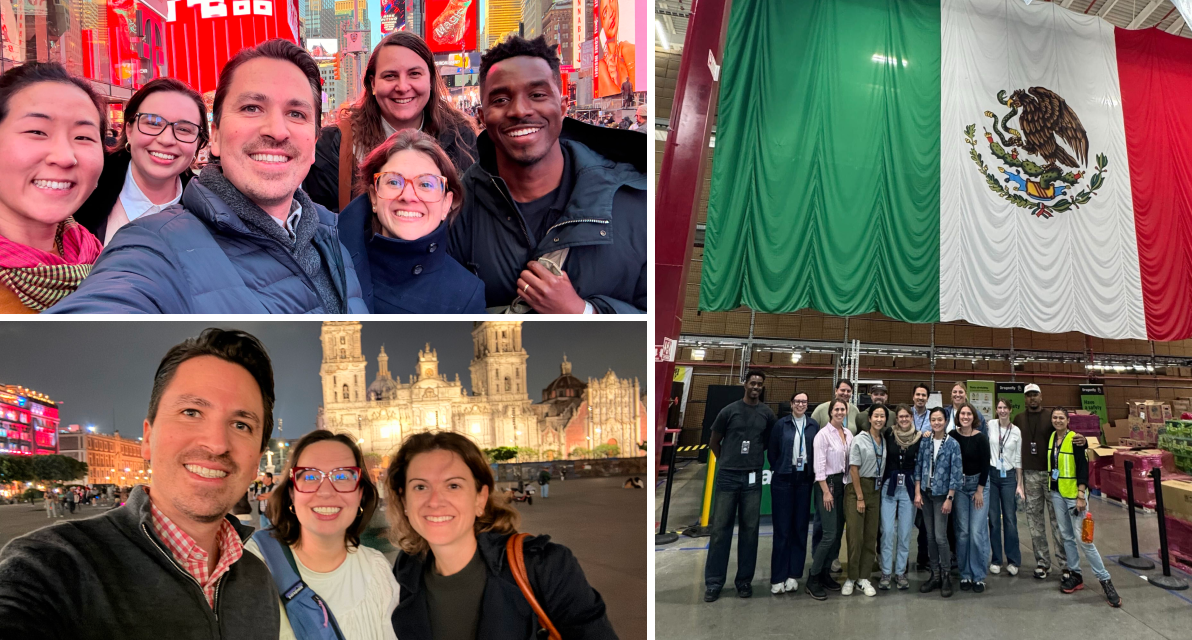
Daniel Berezowsky and members of Amazon's Human Rights Due Diligence team, who assess and help mitigate human rights risks across the company's global operations and supply chains.

Inside the Amazon team working to predict and prevent human rights risks

  • Cecilia Brezmes Alonso

    Senior Lead, Industry Relations, Human Rights, Social Impact & Sustainability, Amazon

Share this article

Daniel Berezowsky and his team support Amazon's work to embed respect for human rights throughout our business activities.

Key takeaways:

  • Daniel Berezowsky leads Amazon's Human Rights Due Diligence efforts within the Human Rights & Social Impact team. His team partners with business units across the company to identify, assess, and mitigate human rights risks throughout Amazon's global operations and supply chains.
  • The team uses AI-powered tools and millions of data points to sharpen human rights risk assessments, moving the discipline toward a more rigorous, data-driven science.
  • Beyond data, the team grounds its work in engagement with workers and affected communities to understand how risks show up in practice and ensure that people remain at the center of every action.

Throughout his career in human rights—from policy and international advocacy to cross-sector consulting and now Amazon—Daniel Berezowsky has seen the role businesses can play in improving people’s lives.
 

That conviction formed before he joined Amazon, through experiences around the world, including visits to sugarcane fields in Malawi, and oil and gas operations in Colombia’s Putumayo region, as well as consultations with domestic workers in Mexico. Berezowsky saw how decisions made at companies, about where to source, whom to hire, and how to operate, shape people’s daily lives. It made him want to influence those decisions from inside an organization. 
 

"That is what brought me to Amazon," he said. "The possibility of delivering impact at the scale that only Amazon can offer."  
 

Today, Berezowsky leads our Human Rights Due Diligence team, which partners with Amazon businesses like cloud computing, logistics, groceries, and consumer electronics to identify and assess human rights risks specific to the business teams' operations, industries, and geographic footprints. His team, which sits under the Human Rights & Social Impact team, develops human rights action plans tailored to help each business proactively prevent, mitigate, and continuously manage those risks.
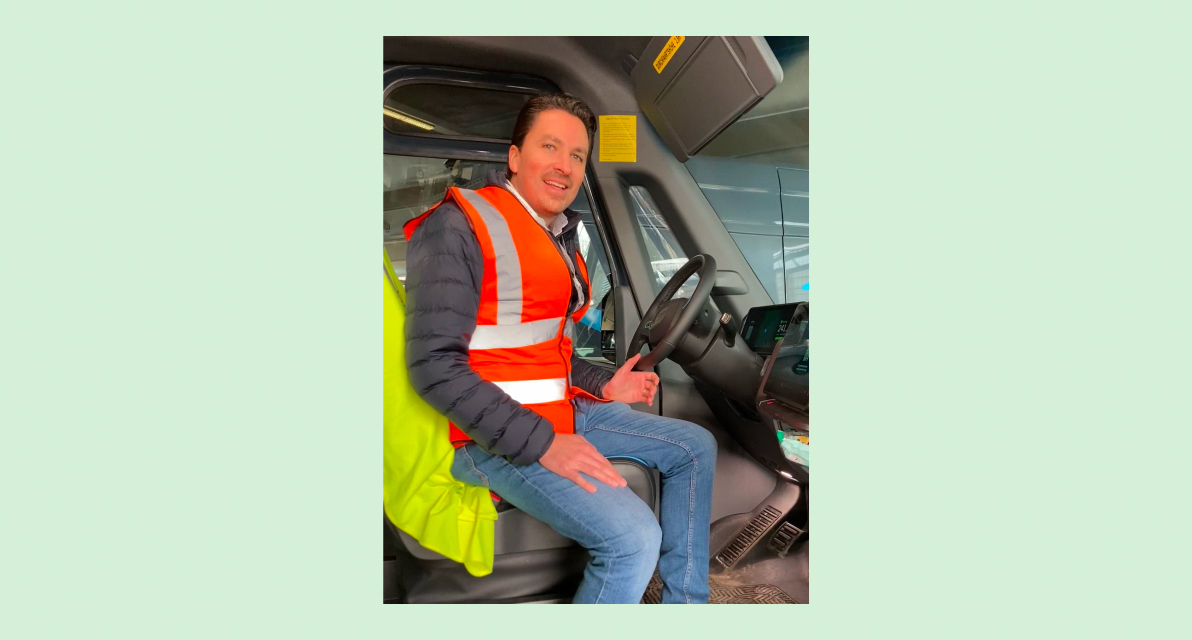
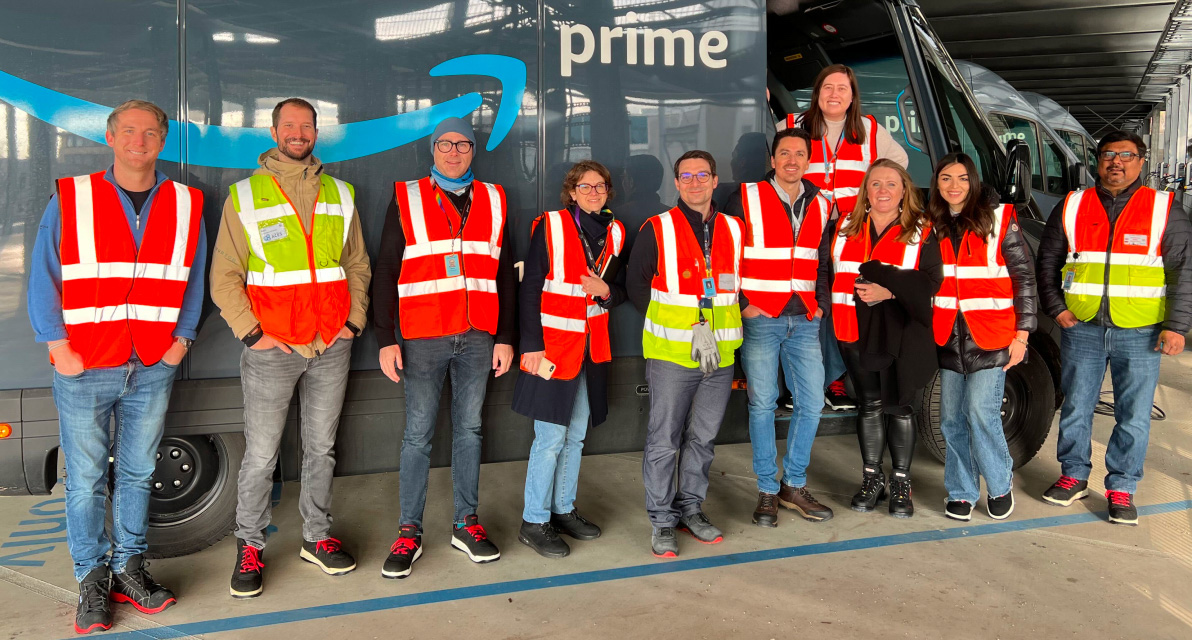
Berezowsky rode along in an Amazon delivery van in Europe, seeing the delivery experience from the driver's perspective.

Seeing the people behind products  


The products and services Amazon offers are made possible by people around the world—many of whom customers never see. A T-shirt's journey to a customer’s door, for example, may have started thousands of miles away with farmers growing and harvesting cotton, before passing through the hands of cotton mill workers, apparel factory workers, warehouse employees, and delivery drivers. 


"Our team helps businesses across Amazon consider the people behind the processes, products, and systems we rely on—and make decisions with those people in mind," Berezowsky said. "Are suppliers in our supply chain working toward providing safe conditions, fair pay, and reasonable working hours for their workers? Do they face harassment or abuse, or barriers to raising concerns? These are some of the questions we ask ourselves every day." 

Daniel Berezowsky and his team in Europe rode with drivers and conducted worker interviews to bring real-world context to the team's data-based assessments.

A more data-driven approach to human rights 


Berezowsky was drawn to Amazon by the opportunity to bring rigorous, data-driven thinking to human rights work. “At Amazon, we challenge the notion that human rights is a matter of judgment rather than a science,” he said. “We are a data-driven business, and we are pushing the boundaries of how we embed data into our human rights work.”   


Berezowsky’s team partners with data scientists to build AI-powered tools that strengthen existing human rights risk assessment processes. By analyzing millions of internal and external data points, these tools help sharpen risk insights across business value chains, improving the ability to identify where human rights risks may arise and prioritize preventive measures. 


He compared this work to taking a photo and then looking at it to see where, within everything Amazon does, there is potential risk to people. “The first picture you take is blurry,” he said. “You see the broad shapes but not the details. Each time you retake it, the picture sharpens, and you know more clearly where to act.”  


An initial human rights assessment in the global logistics sector, for example, may highlight industry-wide considerations related to worker recruitment, working conditions, and subcontracting practices. Deeper analysis then helps us understand where those risks are most likely to emerge, considering factors such as project timelines, the pace and scale of worker recruitment, and the number of labor intermediaries involved. A fast-moving project that hires many workers quickly through multiple agencies carries a different risk profile than a long-term engagement with a stable workforce. We aim to identify these risks before a project begins. How we then engage suppliers depends on our relationship with them, whether that means building capability together over a long-term partnership or setting clear expectations and monitoring closely on a shorter engagement. 


Listening to the people closest to the work 


The team takes a risk-based approach, focusing deeper due diligence where risks are most likely, have the potential to be most severe, and could affect a large number of people. That approach is grounded in international standards, including the United Nations' Guiding Principles on Business and Human Rights.


But identifying potential risk is only part of the picture. The team also talks directly with workers and affected communities—through focus groups, site visits, and feedback channels—to understand how those risks show up in practice and what can be done to address them. 

Berezowsky and his team visit countries around the world, including places like Mexico City.

“You can’t do this work from a spreadsheet alone,” Berezowsky said. “You have to talk to people—it is ultimately about them.” Speaking with workers who have finished a safety training course can help reveal how that training translates into their daily routines, whether they feel equipped to apply it, and what could work better. These insights help the team move beyond assessing policies to identifying practical improvements.  


From insights to action  


Once potential risks are identified and prioritized, the Human Rights & Social Impact team helps each business act on them—embedding management systems and mitigation measures, developing tailored action plans for the most salient risks, and working directly with suppliers and sites to prevent and remediate issues when they arise. Throughout, the work is guided by Amazon's core principle that workers should be at the center of any remediation effort. 


Amazon's scale and diversity make this work complex, but that challenge is also an opportunity to reshape how business decisions are made across the enterprise, including how workers are recruited and suppliers are selected. 


"We're not a single value chain," Berezowsky said. "Our approach must be flexible enough to adapt to different businesses and geographies, consistent enough to set a high bar across the company, and deep enough to reflect the human interactions at every stage."  


“By combining AI, data-driven insight, direct engagement, and targeted action, my team helps the Human Rights & Social Impact team more broadly to advance solutions within Amazon and across our global value chain. Ultimately, getting this right means showing that business can be a force for dignity." 


Learn more about Amazon's approach to human rights.  


Sign up for our monthly newsletter to get Amazon sustainability updates sent to your inbox.


Related stories

  • Human rights

    Jul 30, 2026 3 min 🇳🇵 Nepal

    Preventing human trafficking: How responsible recruitment can protect migrant workers

  • Two people wearing beekeeping suits hold up a honeycomb covered in bees.

    Human rights

    Mar 31, 2026 3 min 🌎 Global

    How Amazon helps fund and advance women-led climate solutions

  • Amazon Leo brings reliable internet to underserved areas, helping more people access and benefit from AI.

    AI

    Jul 28, 2026 4 min 🌎 Global

    10 ways Amazon is using AI to help solve some of the world’s biggest challenges

1 of 3

Article author image

Transcript

  • Human Rights & Environmental Complaints Procedure
  • Disclaimer
  • Sitemap
  • Newsletter Sign-Up opens in a new tab
  • The Climate Pledge opens in a new tab
  • About Amazon opens in a new tab
  • Amazon.com opens in a new tab
  • Investor Relations opens in a new tab
  • Press Center opens in a new tab
  • Privacy Notice opens in a new tab
  • Conditions of Use opens in a new tab
  • Sustainability News opens in a new tab
  • Sustainability Jobs opens in a new tab
  • Follow on LinkedIn opens in a new tab

© 1996-2026 Amazon.com, Inc. or its affiliates

Sustainability

© 1996-2026 Amazon.com, Inc. or its affiliates