Sustainability
  • Progress

    By tracking key metrics and milestones, we demonstrate our commitment to building a more sustainable future worldwide.

    Explore

    • Progress
    • Climate Solutions
      • Climate Solutions
      • Carbon-Free Energy
      • Transportation
      • Buildings
    • Waste & Circularity
      • Waste & Circularity
      • Packaging Innovation
      • Recycle Your Amazon Packaging
    • Natural Resources
      • Natural Resources
      • Water Stewardship
      • Biodiversity
      • Nature in Communities
    • Human Rights
      • Human Rights
      • Human Rights Principles
      • Supply Chain
    • Products & Services
      • Products & Services
      • AWS Cloud
      • Amazon Devices
      • Amazon Devices Climate Tech Accelerator
    • People

      • Customers
      • Employees
      • Communities
    • Climate Solutions
      • Climate Solutions
      • Carbon-Free Energy
      • Transportation
      • Buildings
    • Waste & Circularity
      • Waste & Circularity
      • Packaging Innovation
      • Recycle Your Amazon Packaging
    • Natural Resources
      • Natural Resources
      • Water Stewardship
      • Biodiversity
      • Nature in Communities
    • Human Rights
      • Human Rights
      • Human Rights Principles
      • Supply Chain
    • Products & Services
      • Products & Services
      • AWS Cloud
      • Amazon Devices
      • Amazon Devices Climate Tech Accelerator
    • People

      • Customers
      • Employees
      • Communities
    • For Businesses

      • Sustainability Exchange , opens in a new tab
      • The Climate Pledge , opens in a new tab
      • Sustainability Solutions Hub , opens in a new tab
      • AWS Sustainability , opens in a new tab
      • Sustainability Accelerator Climate Tech
    • For Customers
      • For Customers
      • Recycle Your Amazon Packaging
      • Climate Pledge Friendly , opens in a new tab
      • Pre-Owned Products , opens in a new tab
      • Repair Electronics , opens in a new tab
      • Recycle & Trade-In Electronics , opens in a new tab
    • Sustainability Reports
      • Sustainability Reports
      • 2025 Sustainability Report New
      • 2024 Sustainability Report
      • 2023 Sustainability Report , opens in a new tab
      • 2022 Sustainability Report , opens in a new tab
      • All reports
    • Popular Downloads

      • Carbon Methodology
      • Renewable Energy Methodology
      • Supply Chain Standards
      • All Downloads
  • 2025 Sustainability Report New

    Modern industrial warehouse with two-tone facade, blue canopy over loading docks, delivery vehicles, trees, and reflecting pond in foreground.

    Explore

    • Sustainability Reports

      • 2025 Sustainability Report New
      • 2024 Sustainability Report
      • 2023 Sustainability Report , opens in a new tab
      • 2022 Sustainability Report , opens in a new tab
      • All Reports
    • Sustainability Reports

      • 2025 Sustainability Report New
      • 2024 Sustainability Report
      • 2023 Sustainability Report , opens in a new tab
      • 2022 Sustainability Report , opens in a new tab
      • All Reports
  • Global Action
  • Stories
Sustainability
Back to all stories

10 ways Amazon is using AI to help solve some of the world’s biggest challenges

  • Jul 28, 2026
  • 4 min
  • 🌎 Global

AI

A satellite over the Earth.

Amazon Leo brings reliable internet to underserved areas, helping more people access and benefit from AI.

10 ways Amazon is using AI to help solve some of the world’s biggest challenges

A woman smiling.

Cecilia Brezmes Alonso

Senior Lead, Sustainability, Human Rights & Social Impact, Amazon

Share this article

From cancer detection to disaster response, discover how Amazon is using AI to drive positive social and environmental effects. 

Key takeaways:

  1. Amazon is tackling global challenges using AI ranging from carbon reduction and cancer detection to wildlife and water conservation.
  2. These efforts are already delivering measurable results—helping to eliminate millions of tons of packaging, reduce delivery miles, detect equipment faults before they cause blackouts, and expand economic opportunity for 50 million people worldwide. 

The world's hardest problems demand powerful innovations. Here are some ways Amazon is using AI to help solve complex global issues.


Amazon teams are using AI to estimate the lifecycle carbon footprint of products like Amazon devices and identify opportunities for lower-carbon design.

Amazon teams are using AI to estimate the lifecycle carbon footprint of products like Amazon devices, and to identify opportunities for lower-carbon design.

1. Measuring and reducing carbon emissions

AI helps us predict what customers are likely to need, and where, so we can stock inventory closer to them. In the U.S., that approach helped Amazon avoid 127 million vehicle miles in 2025—shortening delivery distances and helping reduce associated carbon emissions.

AI is also helping us understand and reduce emissions at the product level. Understanding a product's carbon impact has historically been slow and expensive. But Amazon's AI-powered product carbon footprint estimate tool can make that analysis in as few as 10 minutes instead of months. In a single quarter, this technology allowed us to make more than 4,000 product lifecycle assessments, helping identify the biggest emissions sources to act on. 

The Imaging Data Commons—a cloud-based public repository of cancer imaging data—contains 40 million de-identified cancer images.

The Imaging Data Commons—a cloud-based public repository of cancer imaging data—contains 40 million de-identified cancer images.

2. Detecting cancer

Cancer claims nearly 10 million lives each year. AI and cloud technology are opening new ways to detect the disease earlier and personalize care.

Artera's AI pathology tool runs on AWS and helps reduce treatment planning for some prostate cancer patients from six weeks to two days. At Genentech, an AI research agent also running on AWS searches 38 million biomedical papers to help identify promising drug candidates, replacing years of manual effort. Ultima Genomics is using AWS to help reduce the cost of whole-genome sequencing to under $100, making it possible to tailor treatment to each person's biology.

Much of this progress is built on open data. Through the Registry of Open Data on AWS, researchers can freely access more than 1,100 datasets, including 49 related to cancer. Explore more ways AI on AWS is helping advance healthcare.

Amazon used AI to stitch thousands of drone images into this detailed map of areas affected by Hurricane Helene.

Amazon used AI to stitch thousands of drone images into this detailed map of areas affected by Hurricane Helene.

3. Acting quickly when disasters occur 

When Hurricane Maria hit Puerto Rico in 2017, our disaster relief team loaded its first relief flight using spreadsheets and email. Today, we've donated more than 30 million supplies and technology across more than 200 disasters, and the team uses AI to help serve communities with the speed disasters demand.

Amazon now operates multiple Disaster Relief Hubs globally, stocked with supplies and technology. AI agents synthesize data from hubs, nonprofit partners, weather systems, and social media to build a real-time picture of community needs.

After Amazon flew drones over 2,700 acres devastated by Hurricane Helene, AI stitched thousands of aerial images into maps, helping first responders search for survivors in dangerous terrain. The approach is now shaping our response to the earthquakes in Venezuela.

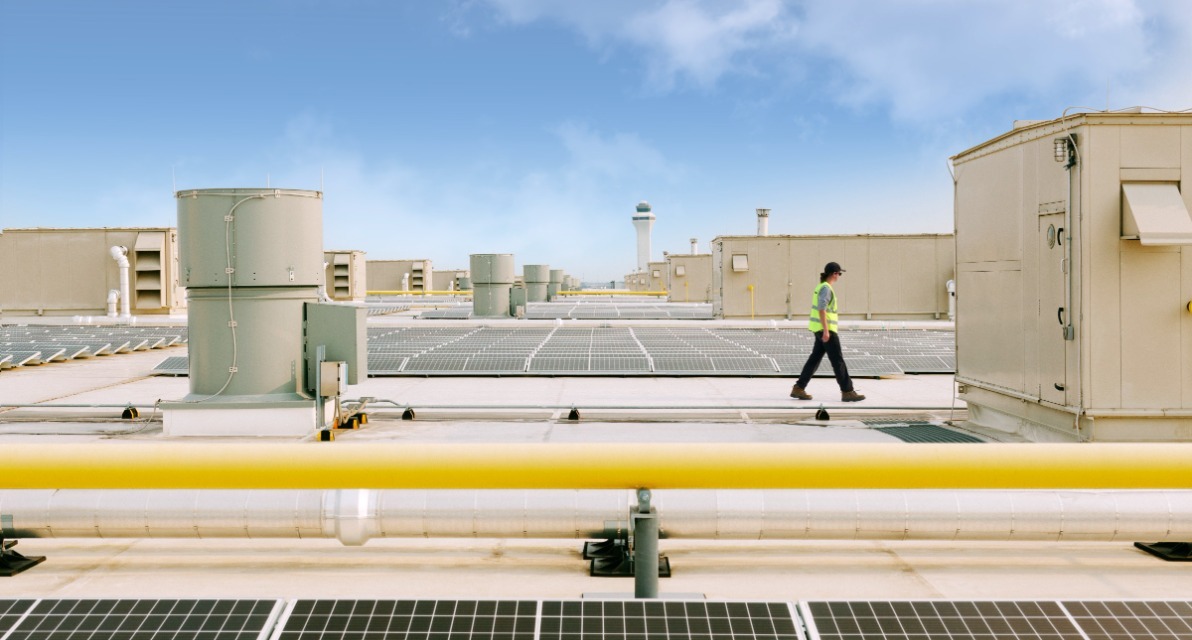
Our Amazon Air Hub located at the Cincinnati/Northern Kentucky International Airport is home to Kentucky’s largest solar array, created in collaboration with Duke Energy.

Our Amazon Air Hub located at the Cincinnati/Northern Kentucky International Airport is home to Kentucky’s largest solar array, created in collaboration with Duke Energy.

4. Making the power grid more reliable and efficient

The electricity that powers our homes, schools, and hospitals runs on aging infrastructure. Over 70% of U.S. power lines and transformers are more than 25 years old and major outages are growing by 20% each year. 

Through AWS, energy companies are now deploying AI to help monitor the grid, so operators can act before a small problem becomes a blackout. Southern California Edison, an electricity provider serving 15 million people, uses AI on AWS to detect equipment faults with up to 80% accuracy before they cause outages. Across the U.S., Duke Energy uses AI to connect rooftop solar to the grid in under 24 hours, down from months. The result: cleaner energy reaching more homes, faster. 

Jane Goodall and field staff at Gombe National Park, Tanzania. (Photo credit: Jane Goodall Institute)

Jane Goodall and field staff at Gombe National Park, Tanzania. (Photo credit: Jane Goodall Institute)

5. Protecting the ecosystems we depend on

Monitored wildlife populations have declined by an average of 73% since 1970. AI helps us better understand nature, so we can better protect it.

For decades, the Jane Goodall Institute documented chimpanzee behavior by hand in more than 500,000 pages of multilingual notes. AWS provided more than $1 million to build an agentic AI research platform that turns these observations into actionable scientific research. 

Amazon's $100 million Right Now Climate Fund pairs conservation funding with AI and cloud technology from AWS. In Belgium, researchers use AI to identify insect species from sound alone—replacing methods that once required killing the insects to count them. And in Australia, a marsupial declared extinct in 1991 is back in the wild thanks in part to the world’s first genetic rescue program and a genomics platform on AWS.

We are also exploring how geospatial foundation models can help us identify potential reforestation sites.

AI pilot projects are helping us predict, prevent, and respond to human rights risks around the world.

AI pilot projects are helping us predict, prevent, and respond to human rights risks around the world.

6. Predicting, preventing, and responding to human rights risks

Respecting human rights across a global value chain starts with identifying risks before they materialize. Amazon is exploring how AI can help.

Our machine learning model analyzes tens of thousands of historical human rights risk signals to predict potential risks such as health and safety or labor rights concerns in our supply chain. It flags nine out of 10 high-risk supplier sites with 85% accuracy, helping teams prioritize supplier engagement. Our research shows that AI can support better decisions even when information is incomplete by identifying meaningful patterns from sparse and fragmented signals. 

AI is also helping combat child sexual abuse. Through AWS, we support nonprofits like Thorn, whose AI-powered tool Safer has helped detect millions of files of suspected abuse material online.

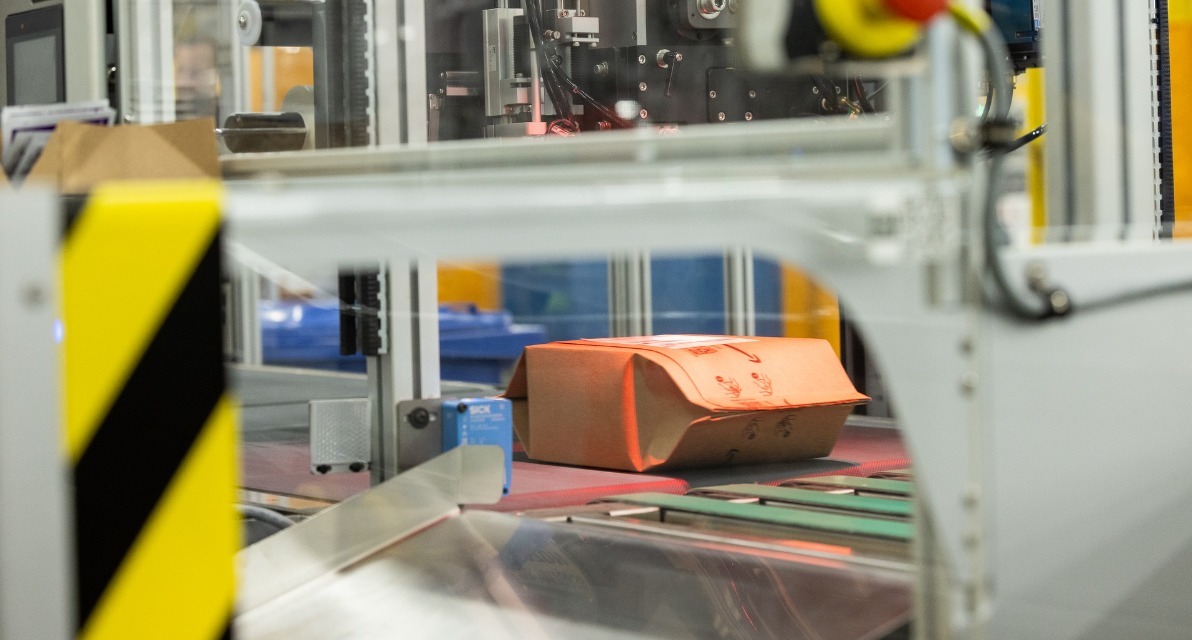
Amazon's AI Packaging Decision Engine identifies the most efficient packaging for millions of products.

Amazon's AI Packaging Decision Engine identifies the most efficient packaging for millions of products.

7. Reducing packaging and avoiding waste 

What’s the right amount of packaging for a product? Too little, and it arrives damaged. Too much, and resources are wasted. 

Amazon's AI-powered Packaging Decision Engine analyzes product characteristics, packaging performance, and customer feedback to determine the most efficient option for millions of items. It’s helped Amazon eliminate over 5.4 million metric tons of packaging material since 2015, or the weight of more than 535 Eiffel Towers.

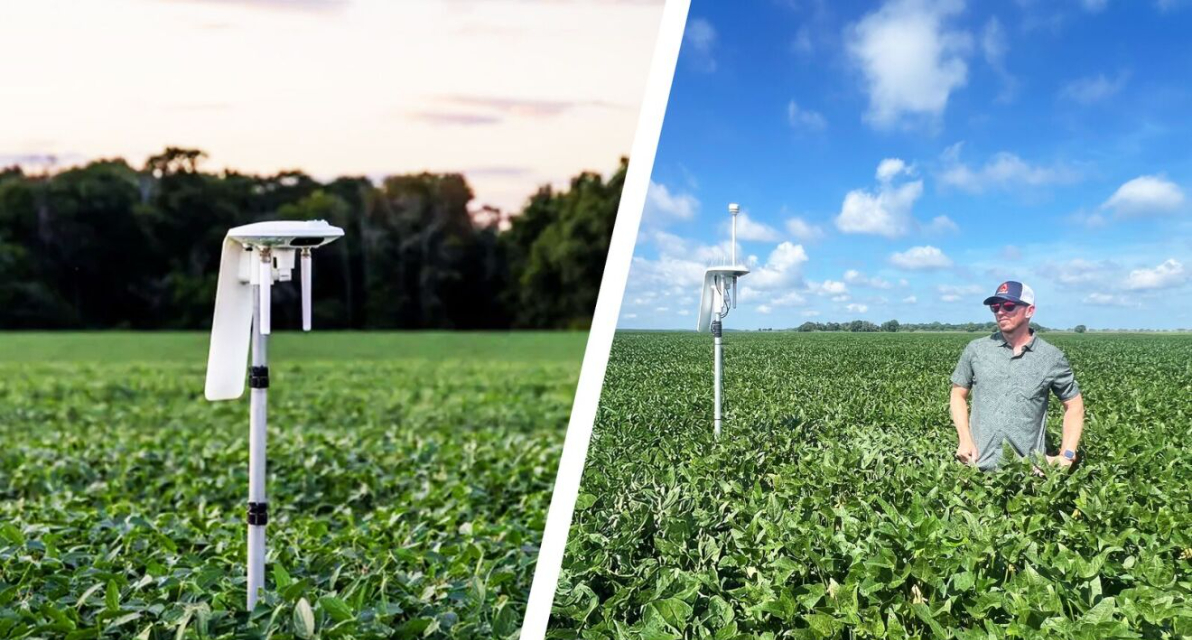
Amazon and Arable announced a smart irrigation project to save water, and benefit Mississippi farmers.

Amazon and Arable announced a smart irrigation project to save water, and benefit Mississippi farmers.

8. Saving water 

Nearly half the world's population experiences severe water scarcity for at least part of the year. 

In Mississippi, Indiana, and Missouri, farmers are deploying AI-powered tools to understand when crops need water, helping to reduce use by an estimated 300 million gallons annually—equivalent to the annual water supply of more than 2,700 American households. By watering only where and when it's needed, farmers can also cut irrigation costs. 

In one Amazon facility, AI found an underground leak, helping prevent an estimated 9 million gallons from being lost each year. We’ve now expanded this technology to 330 sites and expect to save 83 million liters of water annually. 

The AWS Education Equity Initiative committed $100 million to deliver AI-powered learning to underserved communities.

The AWS Education Equity Initiative committed $100 million to deliver AI-powered learning to underserved communities.

9. Expanding economic opportunity 

Around the world, millions of people face barriers to learning due to cost, geography, or limited internet access. 

We launched the AWS Education Equity Initiative, committing $100 million in AI and cloud technology through 2029 to support AI-powered learning solutions for underserved communities. In its first year, the program supported more than 300 organizations in over 40 countries like Brazil, where an AI platform provides personalized learning and exam preparation to 600,000 young people. 

Through our Future Ready 2030 initiative, we also committed $2.5 billion to help 50 million people worldwide develop the skills needed for the future of work. 

And through Amazon Leo, we’re bringing affordable internet to communities beyond the reach of traditional networks.

Amazon's Eye Gaze on Alexa lets people with mobility or speech disabilities control Alexa with their eyes—enabling essential daily actions.

Amazon's Eye Gaze on Alexa lets people with mobility or speech disabilities control Alexa with their eyes—enabling essential daily actions.

10. Building a more accessible world

One in six people live with a significant disability, and 77% of adults with a disability use technology to help with tasks an average of 13 times a day. Amazon builds accessibility into every device. For example: Eric is quadriplegic. Opening doors, turning on lights, and vacuuming could require different tools or someone’s help. Alexa lets him manage it all with just his voice.

For customers with mobility or speech disabilities, Amazon built Eye Gaze on Alexa, which tracks where a person is looking across customizable tiles on a screen. This lets customers control Alexa with their eyes, giving them more autonomy over essential daily actions, from calling a loved one to turning on a light.


Sign up for our monthly newsletter to get Amazon sustainability updates sent directly to your inbox.

Related stories

  • AI

    Jul 22, 2026 5 min 🌎 Global

    How AI is transforming Amazon’s disaster relief efforts around the world

  • AI

    The Climate Pledge Stories

    Jul 15, 2026 4 min 🇺🇸 United States

    How AI is accelerating the shift to lower-carbon concrete , opens in a new tab

  • AI

    AWS YouTube

    Jul 13, 2026 34 min 🇺🇸 United States

    The growth strategy hiding inside sustainability — and why AI unlocks it , opens in a new tab

1 of 3

Article author image

Transcript

  • Human Rights & Environmental Complaints Procedure
  • Disclaimer
  • Sitemap
  • Newsletter Sign-Up , opens in a new tab
  • The Climate Pledge , opens in a new tab
  • About Amazon , opens in a new tab
  • Amazon.com , opens in a new tab
  • Investor Relations , opens in a new tab
  • Press Center , opens in a new tab
  • Privacy Notice , opens in a new tab
  • Conditions of Use , opens in a new tab
  • Sustainability News , opens in a new tab
  • Sustainability Jobs , opens in a new tab
  • Follow on LinkedIn , opens in a new tab

© 1996-2026 Amazon.com, Inc. or its affiliates

Sustainability

© 1996-2026 Amazon.com, Inc. or its affiliates