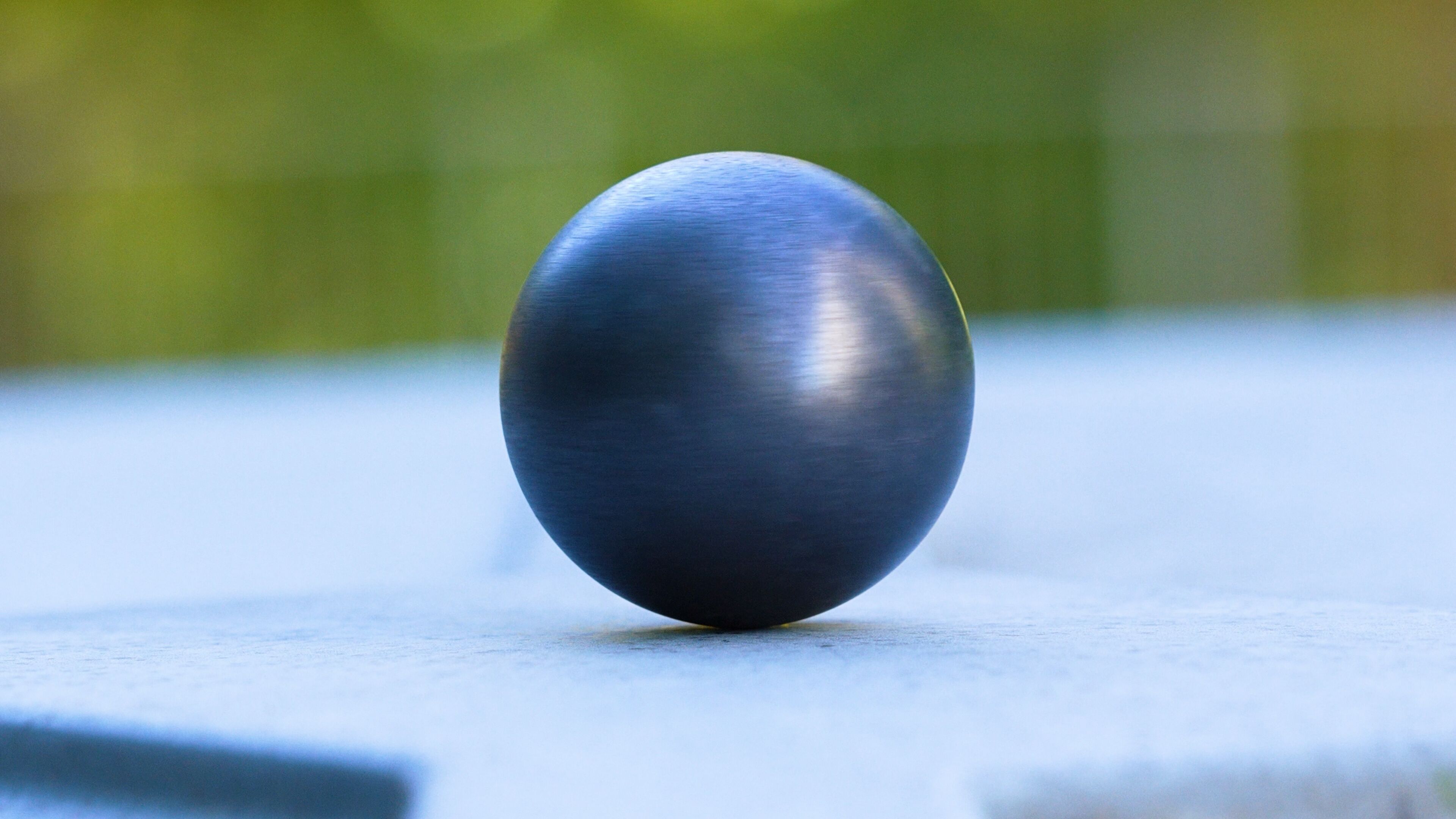
A fuel pebble the size of a fist that holds the power of six tons of coal is sparking a new generation of small, safe, scalable nuclear reactors built to meet surging global electricity demand.
Key takeaways:
- Nuclear can fill a critical gap in the global energy mix, with the potential to generate consistent, carbon-free electricity around the clock.
- The design of Small Modular Reactors (SMRs) makes nuclear energy more scalable and affordable.
- SMRs, like X-energy's Xe-100 model, are designed to be inherently safe. If unanticipated circumstances occur, they cool themselves passively without machines, water, or human intervention, and their fuel pebbles cannot melt in a reactor.
- Amazon and X-energy are building a 12-reactor nuclear facility in Richland, Washington, projected for the early 2030s.
It doesn't look like much. A smooth, dark ball about the size of a fist, coated in layers of carbon and ceramic, and small enough to slip between couch cushions. It’s called a fuel pebble, and a new generation of nuclear reactors are being built around it.
This unassuming sphere packs a punch. Each pebble holds as much energy as six tons of coal. It is the fuel source for SMRs, nuclear reactors that are designed to be safer than traditional reactors and more easily scalable.
Nuclear power has been generating electricity since the 1940s. But, by the late 1980s, public perception of nuclear power had soured. Growing pressure for more transparency and regulation—alongside accidents like Chernobyl and Three-Mile Island—impacted the industry’s growth. Development and construction of new nuclear power plants stalled worldwide, including nations such as Italy rejecting nuclear power in a 1987 referendum.
Now, circumstances have changed. Global electricity demand is surging at a pace the grid has never experienced, driven by industrial growth, electrification, and artificial intelligence. To meet this growing need, countries and communities that rejected nuclear power are leaning into it. For example, Italy’s parliament recently passed a motion urging the government to reconsider nuclear in the national energy mix.
While wind and solar are critical to meeting rising energy demand, they are only part of the solution. Nuclear is also carbon-free but it can run consistently at all times of day. And, just like wind and solar, SMRs are designed to be safe.
You can think of SMRs as gumball machines for energy. Fuel pebbles—each packed with thousands of tiny uranium particles—drop into the reactor core, where atoms split in a process called fission, releasing intense heat. Helium gas flows past the pebbles, absorbs that heat, and carries it to a steam generator that spins a turbine to ultimately make electricity.
SMRs are also designed so that if anything goes wrong, the system cools itself—without machines, water, or human intervention. In traditional reactors, losing power meant that water had to manually be pumped in before the core overheated.
"SMRs are intended to be inherently passive, which means they don’t need human input,” said Benjamin Reinke, deputy chief commercial officer at X-energy. “They do not rely on power to perform their shutdown."
The fuel pebbles’ ceramic layers withstand temperatures hotter than molten lava. The U.S. Department of Energy has stated that TRISO particles—tri-structural isotropic particle fuel made of a uranium, carbon, and oxygen fuel kernel—cannot melt in a reactor.
Because SMRs are small, their components can be manufactured in a factory and shipped to a site. Modules can be added one by one as demand grows, driving down costs in a way that’s similar to how solar panels became more accessible and affordable.
"You can drive out cost, increase quality, and, by becoming modular, you can truly start to scale it up,” said Brandon Oyer, director of energy and water for Amazon Web Services (AWS).
In Richland, X-energy and power utility Energy Northwest are planning to build an SMR facility with support from Amazon and our broader investment and collaboration with X-energy. The project is projected to house up to 12 reactor modules, generating 960 megawatts of power—that’s enough carbon-free electricity to power more than 700,000 homes on a footprint roughly 4% of the size of Central Park in New York City.
“If you're going to go for decarbonization, you have to put nuclear into the mix,” said Denise Brandon, engineering manager for nuclear development at Energy Northwest.
This project is another step on the path to introducing more SMRs around the world. Fuel is being manufactured, reactor designs are advancing through regulatory review, and construction timelines are taking shape for the early 2030s. Safe, scalable, carbon-free nuclear power is closer than it has ever been.
Learn more about Amazon’s investment in a carbon-free energy future.
Sign up for our monthly newsletter to get Amazon sustainability updates sent directly to your inbox.


.jpg/jcr:content/renditions/cq5dam.web.1920.1920.jpeg)