Amazon Sustainability: How will carbon-free energy help Amazon reach net-zero carbon by 2040, and why does it matter more broadly?
Mandy Ulrich: Energy powers almost every aspect of Amazon’s business: data centers, fulfillment centers, offices, stores—even charging electric vehicles. By 2040, we aim to achieve net-zero carbon emissions across our operations. Part of reaching that goal is to tackle our emissions related to electricity, known as Scope 2 emissions.
Scope 2 emissions are indirect emissions resulting from the generation of purchased energy, like the electricity used to power Amazon facilities. To make real progress on those emissions, we are working to evaluate where grids are most heavily reliant on fossil fuels as part of our investment in carbon-free energy projects to help prioritize investments in those grids. We’ve done this in regions where we operate such as India and Poland because the impact on these carbon-intensive grids can be especially meaningful.
This isn’t just about Amazon. It’s about helping decarbonize entire grids, supporting communities, creating jobs, and building energy infrastructure that benefits everyone. One company can’t solve climate change alone, but by moving early and at scale, we can help create a roadmap for others to follow.
Amazon Sustainability: Why is Amazon taking a broader carbon-free energy approach, as opposed to focusing solely on renewable energy?
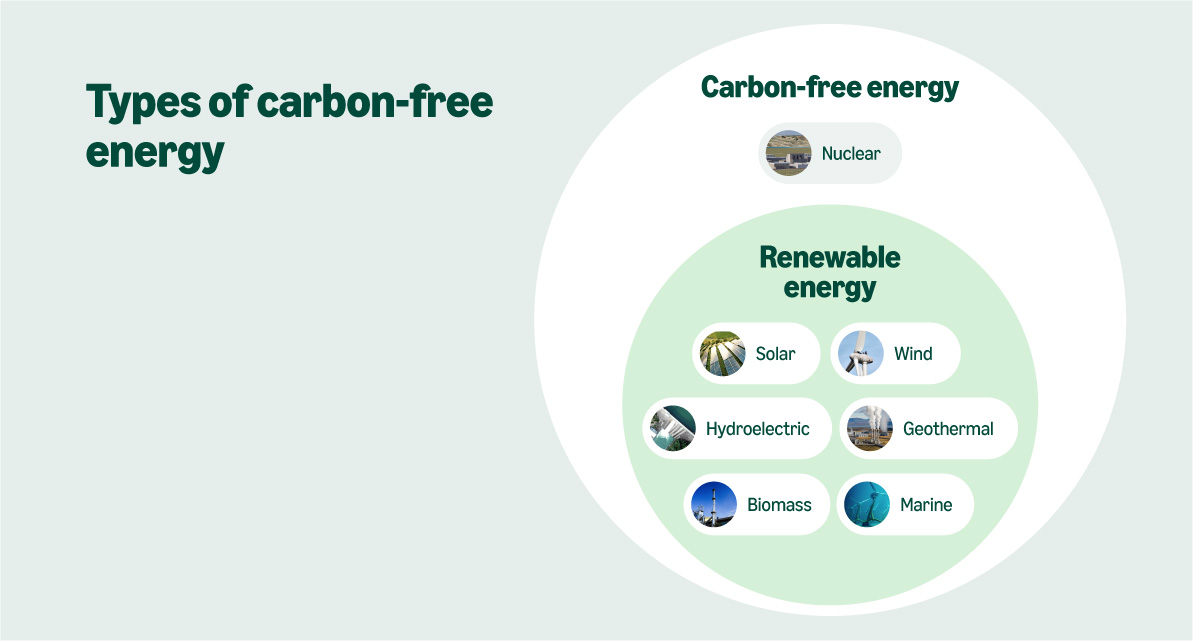
Mandy Ulrich: It’s important to be clear here: We're not shifting away from renewables. We're just expanding our strategy to also focus on other sources of carbon-free energy.
The reality is that global energy demand is continuing to increase. Renewable projects are fantastic, but the sun isn’t always shining, and the wind isn’t always blowing. Meanwhile, healthcare systems need access to patient records, people want to bank online, and our customers expect reliable compute power and storage around the clock. There simply isn’t enough renewable energy to meet these demands.
To support that, we need reliable, firm power to meet fundamental customer demands that operate around the clock regardless of weather. Advanced nuclear is a solution that can provide that kind of electricity, and power operations at our size and complexity. It is part of the solutions we need as we work toward our 2040 net-zero carbon goal.
Amazon Sustainability: Are these carbon-free energy investments happening now, or are they future-focused?
Mandy Ulrich: It’s a mix of both. There are things happening in real time today, alongside longer-term investments that will support future energy needs.
Small modular reactors (SMRs) will take time to come online, so those are investments we’re making now for the future. But we’re also investing in existing nuclear facilities today.
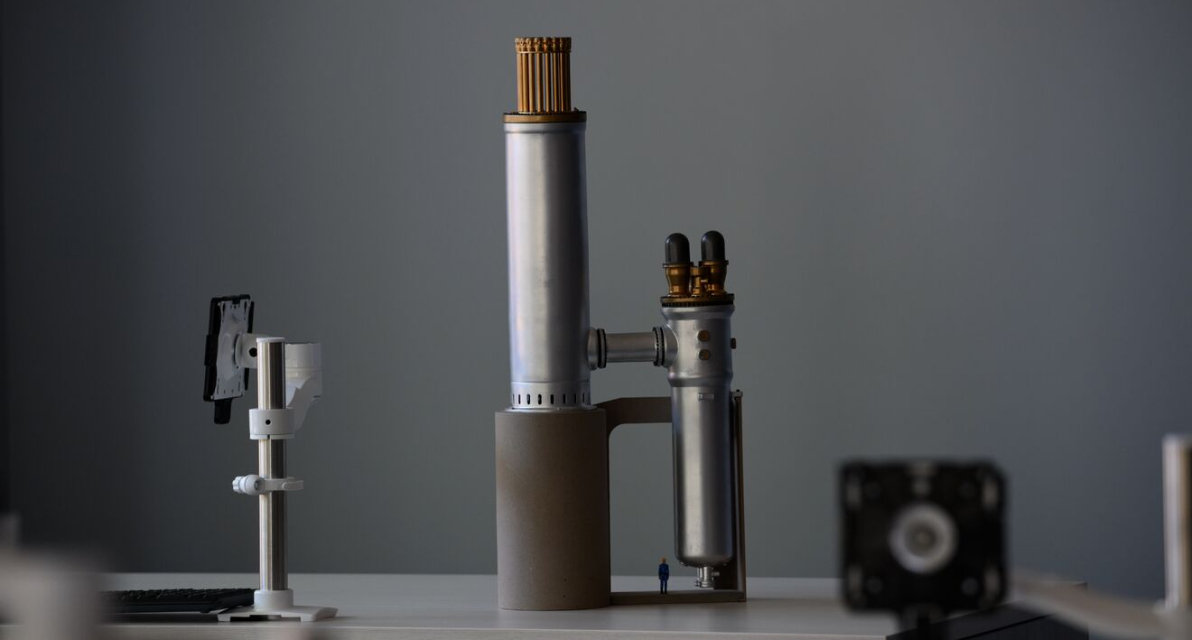
- We’ve made a $500 million equity investment in X-energy to help the company advance its aim to bring more than five gigawatts of new nuclear capacity online in the U.S. by 2039, which is enough electricity to power roughly four million homes. This will be the largest commercial deployment of SMRs to date.
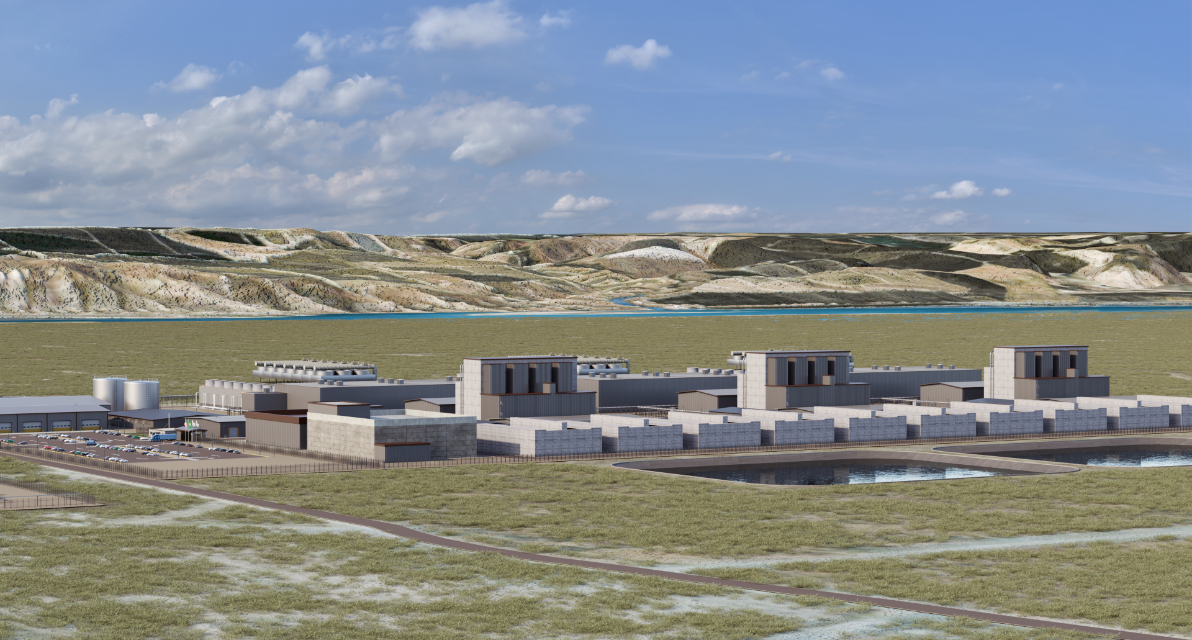
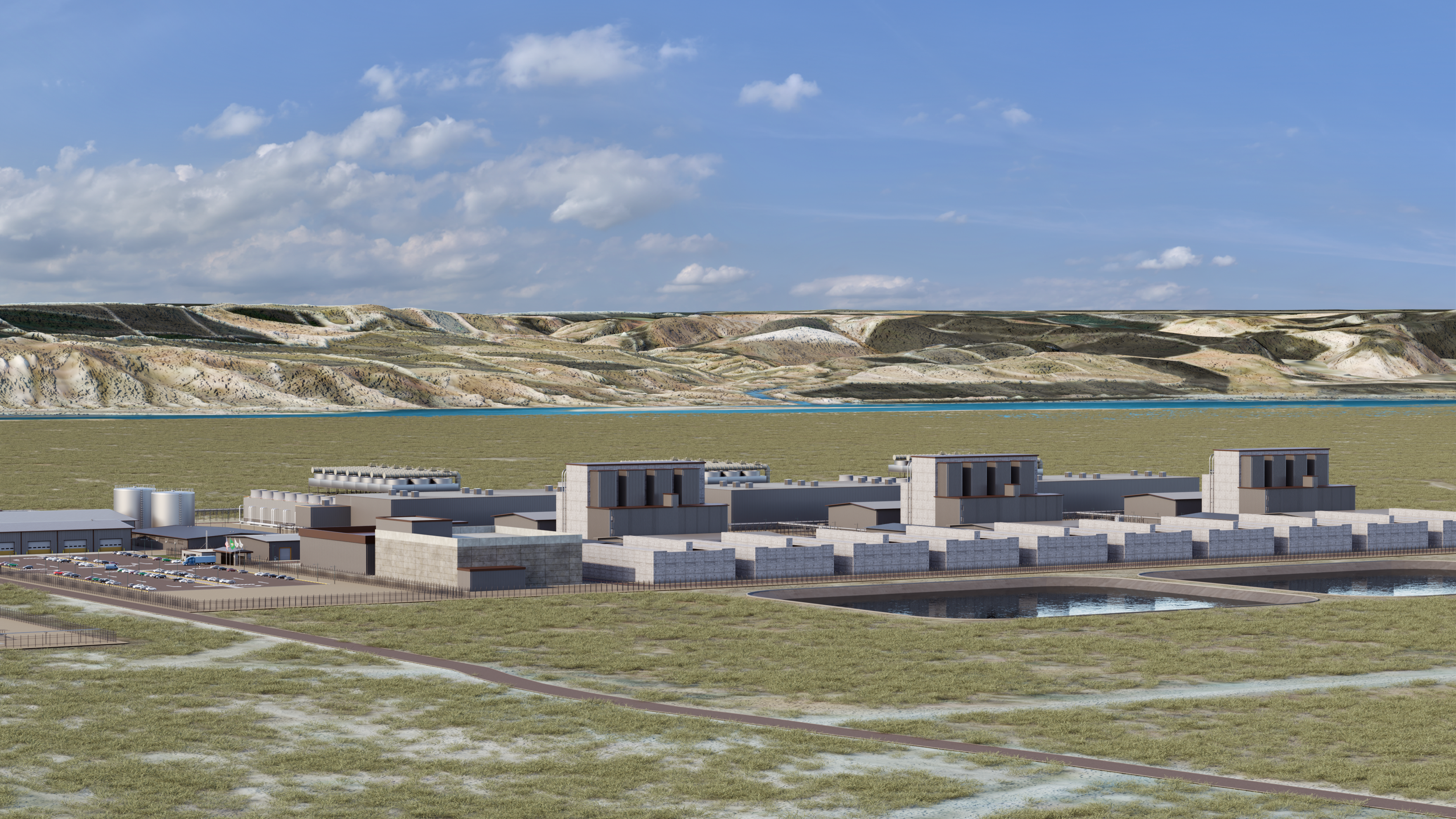
- We’ve collaborated with Energy Northwest in Washington state to deploy an SMR project that is expected to generate 320 megawatts, but it's expandable up to 960 megawatts. At its full capacity, this could power about 750,000 homes.
- We’ve invested in Talen Energy’s existing nuclear facility in Pennsylvania allowing us to access up to 1.9 gigawatts of existing nuclear capacity to help power AWS data centers.
- At the same time, we’re deploying battery storage projects, geothermal efforts, and hybrid solar and wind projects in different regions, such as a fulfillment center in Japan.