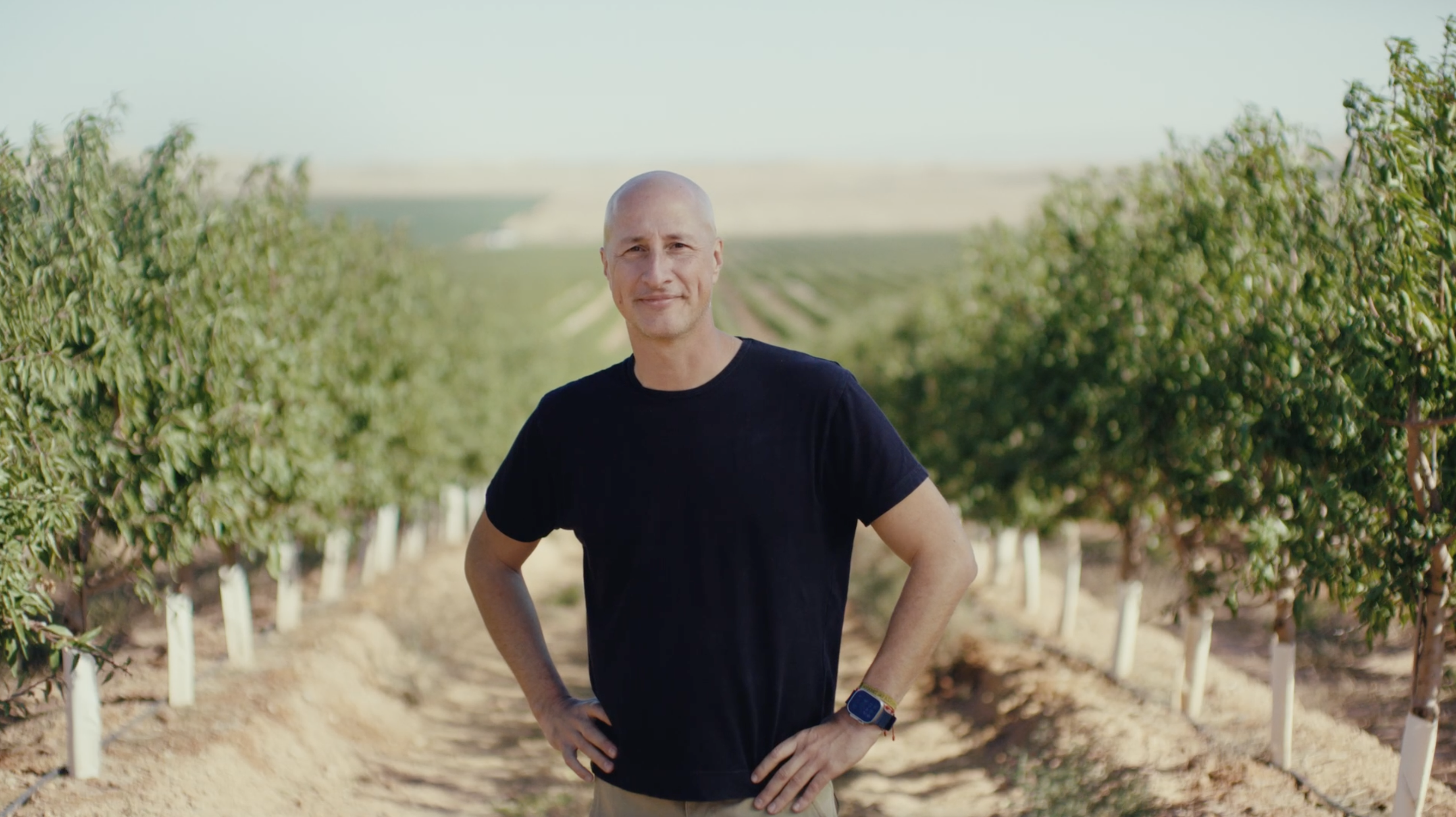
With support from Amazon and Amazon Web Services (AWS), farmers in Spain are transforming agricultural water use with AI while strengthening harvests.
Only 3% of the world’s water is fresh, and less than half of that is even available for human consumption—a supply that’s largely dedicated to agriculture, which uses about 70% of the accessible freshwater around the world. That water doesn’t just hydrate crops; it keeps soil healthy, sustains microorganisms, supports livestock, and powers food production infrastructure. As pollution, population growth, and increasingly unpredictable weather make freshwater less reliable, farmers are under pressure to adapt even though irrigation practices haven't fundamentally changed in thousands of years, according to the Lincoln Institute of Land Policy.
For farmers like Miguel Angel Ferrer, managing farmer at Finca El Forado in Spain, the margin between having enough water for crops and leaving them parched is razor thin. Now Miguel is taking a new approach; with help from Amazon and Agrow—an AI cloud-based agriculture solution that uses AWS—he’s replacing guesswork with real insight. By combining satellite imagery, soil-moisture sensors, and hyperlocal weather data, he can irrigate with precision instead of instinct. AI and cloud computing translate those signals into dynamic, crop-specific watering plans. On his almond farm, this transition has cut water use by as much as 50% annually while strengthening harvests.
We are expanding this innovative approach across Brazil, Chile, and the United States through strategic partnerships transforming agricultural water use. In Brazil, we are working with climate tech company Kilimo to help farmers use AI to calculate water consumption and monitor soil conditions with data-backed irrigation decisions. Meanwhile, in Mississippi's Delta region, we are working with Arable and Mississippi State University to help farmers monitor crucial data points like soil moisture and weather patterns.
While water remains a finite resource, the tools we use to manage it are evolving fast. From helping farmers adapt to drought and shifting climate patterns to supporting Amazon’s progress to be water positive across data center operations by 2030, these innovations are shaping a more resilient future for water.
Learn more about how Amazon is turning runoff into a resource.
Sign up for our monthly newsletter to get Amazon sustainability updates sent directly to your inbox.